Water Dry-Off Oven
KONE Elevator India
36%fuel reduction
An 18.6% overall paint-shop fuel reduction is also documented for the project.
Review project evidenceISCT applies Thermo-Ceramic Coating™ to industrial furnaces, ovens, and process equipment to help reduce heat loss, protect operating surfaces, and evaluate thermal performance.
12 documented studiesResults vary by asset, process, and operating conditions.
8–36% reported rangeEnergy outcomes shown in selected case studies.
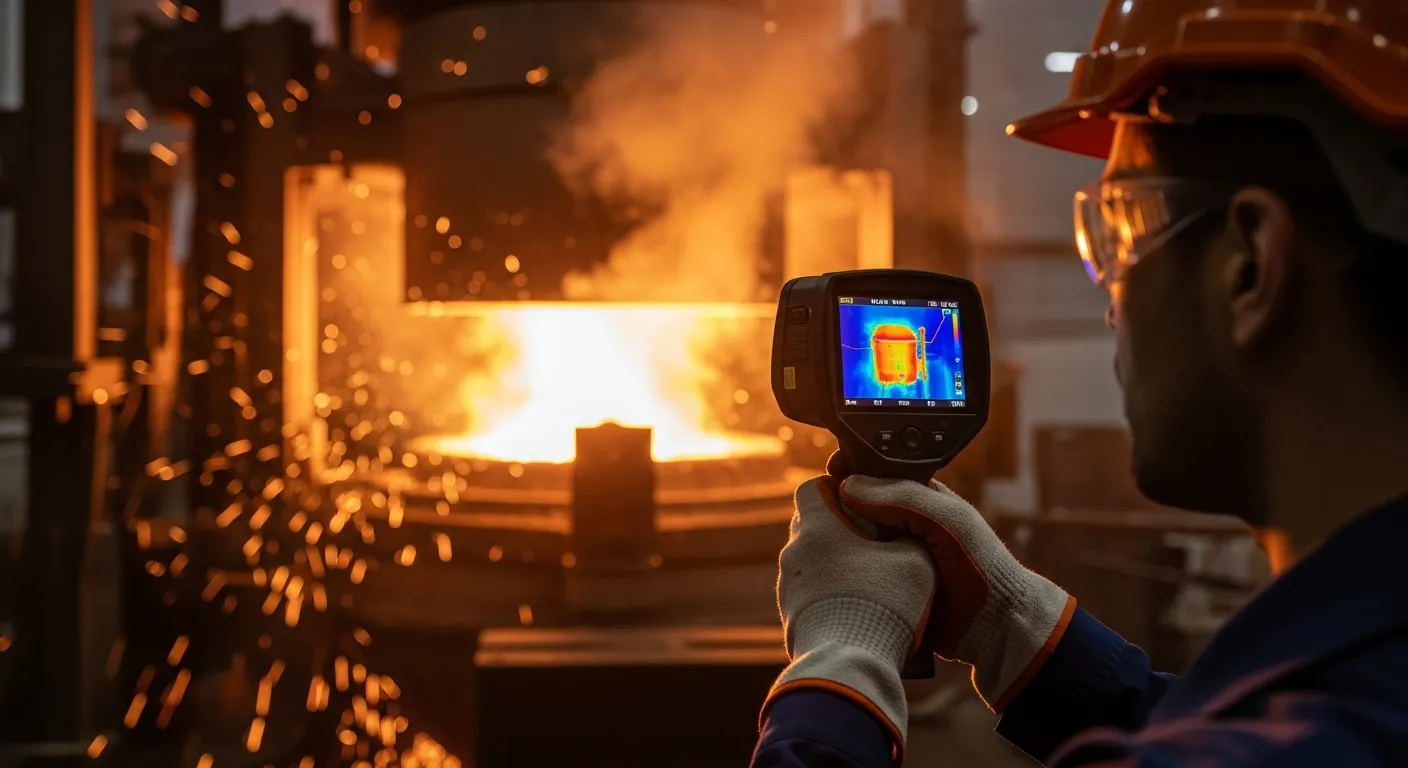
Industrial equipment can lose heat through walls, roofs, doors, and exposed surfaces. A thermal inspection helps identify where the process is giving energy away.
Significant thermal energy escapes through furnace walls, kiln surfaces, and process equipment — reducing operational efficiency and increasing fuel costs.
Elevated external surface temperatures indicate poor insulation and wasted energy in any heat-bearing equipment.
Energy loss forces systems to consume more fuel or electricity to maintain required temperatures.
Higher energy consumption directly increases carbon dioxide emissions and environmental impact.
Traditional insulation degrades over time, leading to progressively worse thermal performance and increasing energy wastage in industrial furnaces and ovens.
A three-step process that helps teams move from identified heat loss to a more controlled thermal surface.
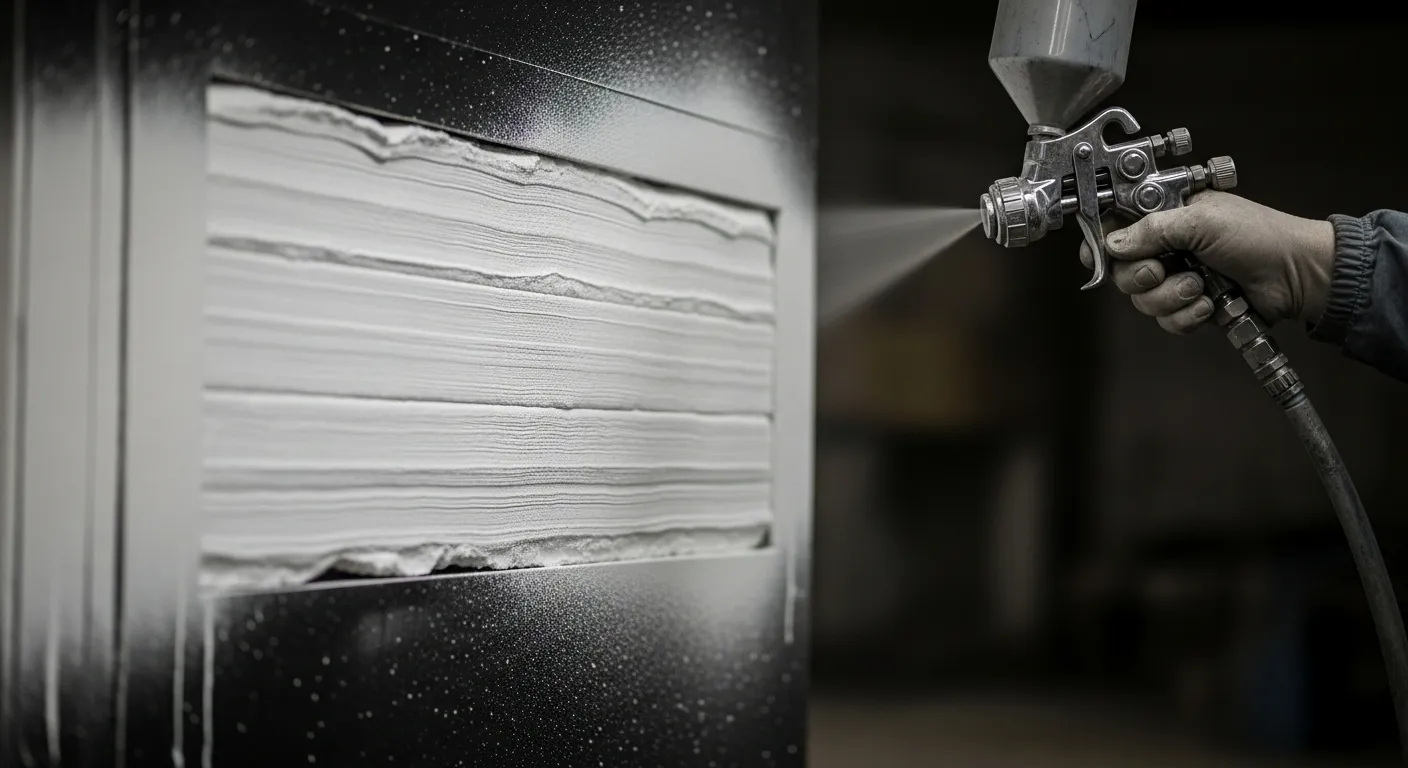
High-performance TCC™ is applied to equipment surfaces — internally on ovens, and both internally & externally on furnaces, kilns, and process equipment.
The coating reflects infrared radiation and acts as a thermal barrier — keeping thermal energy where it belongs, retained within the equipment.
Energy loss reduces significantly, lowering fuel consumption, electricity usage, and CO₂ emissions measurably.
The thermo-ceramic coating creates a thermal barrier that reflects infrared radiation back into the furnace or oven, keeping thermal energy where it belongs — inside the equipment. Documented outcomes vary by equipment, process, and operating conditions, so each project should begin with a technical evaluation.
Drag the divider to compare heat loss before and after TCC™ application — applied internally on ovens, and both internally & externally on furnaces.
Without coating, heat escapes through all equipment surfaces — walls, doors, roofs. Wasted energy means higher fuel consumption, higher electricity bills, and unnecessary CO₂ emissions.
Reported installations
Across multiple industrial sectors
Case studies available
Named projects with operating context
Industry sectors
From automotive to process industries
Initial response target
For submitted evaluation requests
Trusted Partnerships
See how our thermo-ceramic coating technology compares to traditional insulation methods.
Outdated approach
Traditional insulation demands costly equipment downtime for installation and replacement.
Cannot be applied to complex geometries, irregular shapes, or hard-to-reach areas.
Absorbs moisture, corrodes substrates, and requires frequent replacement — especially in harsh industrial environments.
Hidden corrosion under insulation (CUI) goes undetected, causing safety risks and failures.
Modern solution
Applied in just 3-4 days with minimal production interruption — far less than traditional insulation overhauls.
Coats pipes, tanks, valves, flanges, and complex geometries with a simple spray application.
Project-specific energy outcomes reviewed with thermal imaging, baseline data, and operating context.
Weather-resistant, non-toxic, and maintenance-free with consistent performance for over 5 years.
Choose the TCC™ variant appropriate for the operating range and surface. Expected outcomes require a project-specific evaluation.
Tap any card to see industry applications
A systematic four-stage methodology — from thermal diagnosis to verified performance improvement — applied consistently across every installation.
FLIR thermal imaging maps every heat-loss zone across your furnace or oven surfaces. We quantify baseline shell temperatures, emissivity values, and radiant loss before any coating is applied.
Surfaces are degreased, cleaned, and mechanically prepared. Proper preparation is the non-negotiable foundation — it ensures the ceramic layer bonds correctly and lasts the full 5+ year service life.
Thermo-Ceramic Coating™ is spray-applied at 200–250 microns. Surface emissivity rises from ~0.2–0.3 (bare metal) to 0.92 — maximising infrared re-radiation back into the process chamber.
Post-application thermal imaging confirms the improvement. Every project receives a before/after performance report with shell temperature differentials, energy savings estimate, and CO₂ reduction figures.
These selected outcomes are tied to specific equipment and operating contexts. Results vary by asset, process, baseline, and operating conditions.
Water Dry-Off Oven
An 18.6% overall paint-shop fuel reduction is also documented for the project.
Review project evidenceSealed Quench Furnace
The documented project also records a 4% reduction in electric power use.
Review project evidenceAnnealing Furnace
The project record notes 33.24 tons/year of CO₂-emission savings.
Review project evidenceReview the full equipment, baseline, outcome, and available supporting evidence before using any project result as a benchmark.
Our thermo-ceramic coating technology serves industries where high-temperature processes demand energy efficiency.
Review each project with its equipment, measured outcome, and available supporting evidence. Results vary by asset and operating context.
Water Dry-Off Oven
36% fuel reduction on WDO oven and 11% on PBO. Overall paint shop savings of 18.6%.
Sealed Quench Furnace
24% LPG fuel reduction + 4% electric power savings. ROI in just 4 months.
Annealing Furnace
22% specific fuel reduction with 33 tons/year CO₂ emission reduction.
Each result below names the equipment and location so decision-makers can review the relevant project context.
Sealed Quench Furnace
Coimbatore, India
24% LPG fuel reduction
The project record also notes 4% electric-power reduction and a four-month ROI.
Water Dry-Off & Powder Baking Ovens
SIPCOT, Chennai
36% WDO fuel reduction
The project record reports 11% reduction for the PBO and 18.6% overall paint-shop fuel reduction.
Turbine Duct
Gurgaon, India
40–70°C shell-temperature reduction
Thermal imaging recorded a 25–30% overall temperature reduction in the coated areas.
Evaluation FAQ
Clear answers, careful claims, and direct paths to the right evidence or conversation.
Request an equipment evaluationBacked by industry-leading certifications and partnerships that validate our commitment to quality and innovation.
Recognized partner of Bureau of Energy Efficiency for energy conservation initiatives
Strategic partnership with Deutsche Gesellschaft für Internationale Zusammenarbeit
Registered under Ministry of Micro, Small and Medium Enterprises, Government of India
Proudly developed and manufactured in India for global industrial applications
Click on different parts of the equipment to understand where energy loss occurs and how our coating technology addresses each area.
1000°C+
The largest surface area where heat escapes. Coating application here delivers maximum energy savings.
Hot air rises, making the roof a critical heat loss point. Coating reflects radiated heat downward.
Door surrounds and frames lose heat through conduction and radiation. Coating minimizes this loss.
Watch how ISCT's thermo-ceramic coating technology delivers real energy savings, featured in collaborations with leading energy organizations.

ISCT × BEE Documentary
Bureau of Energy Efficiency Collaboration
ISCT × BEE Documentary
Bureau of Energy Efficiency Collaboration
ISCT × GIZ Documentary
GIZ Collaboration — Furnace Energy Savings
ISCT × GIZ Documentary
GIZ Collaboration — Furnace Energy Savings
Real-world findings from our Furnace & Oven Magazine 2024–25, energy audits, and documented industrial results.
A growing body of named industrial project references across India shows where ISCT’s thermal coating work has been applied.
Mahindra & Mahindra
Automotive
Maruti Suzuki
Automotive
Tata Motors
Automotive
Hero MotoCorp
Automotive
Ashok Leyland
Automotive
Bajaj Auto
Automotive
Hyundai Motors
Automotive
Yamaha India
Automotive
Mahindra CIE
Automotive
Delphi TVS
Automotive
Lucas TVS
Automotive
Varroc Engineering
Automotive
ASK Automotive
Automotive
Perkins India
Automotive
Bharat Gears
Automotive
Hi-Tech Gears
Automotive
GNA Duraparts
Automotive
Rolex Rings
Automotive
Belrise India
Automotive
Minda Industries
Automotive
KONE Elevators
Manufacturing
Whirlpool India
Manufacturing
Lakshmi Machine Works
Manufacturing
Vulkan Technologies
Manufacturing
Emkay Casting & Forging
Forging
Sumangal Castings
Forging
Indo Shell Cast
Forging
Bharat Forge
Forging
Bonfiglioli
Manufacturing
Mungi Engineering
Manufacturing
Minda Kosei
Manufacturing
Neokraft India
Manufacturing
Godrej & Boyce
Manufacturing
Adish Aluminium
Aluminium
Hindalco Industries
Aluminium
Pascal Switch Care
Switchgear
Jubilant Ingrevia
Chemical
Aarti Industries
Chemical
UltraTech Cement
Cement
Kirloskar Textile Machinery
Textile Machinery
Supreme Industries
Manufacturing
M&M Commercial Vehicles
Automotive
IFB Industries
Manufacturing
BCH Electric
Electrical
Hover over the rows to pause · Scroll to explore all 44 clients
Share the equipment, operating conditions, and the concern you want to solve. ISCT can then review the context and help you choose an appropriate next step.